
In 2026, many CDT authors make outstanding contributions to our journal. Their articles published with us have received very well feedback in the field and stimulate a lot of discussions and new insights among the peers.
Hereby, we would like to highlight some of our outstanding authors who have been making immense efforts in their research fields, with a brief interview of their unique perspective and insightful view as authors.
Outstanding Authors (2026)
Daisuke Shishikura, Osaka Medical and Pharmaceutical University, Japan
Zahid Khan, Queen Mary University, UK
Thanh Luan Nguyen, Vietnam Military Central Hospital 108, Vietnam
Arif Timuroğlu, Dr. Abdurrahman Yurtaslan Ankara Oncology Training and Research Hospital, Turkey
Yuji Nagatomo, National Defense Medical College, Japan
Karthik Gonuguntla, Hartford Healthcare System, USA
Outstanding Author
Daisuke Shishikura
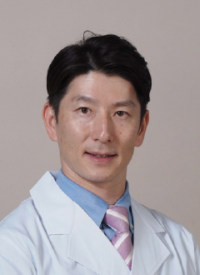
Dr. Daisuke Shishikura is an interventional cardiologist at Osaka Medical and Pharmaceutical University, Japan. After general and interventional cardiology training at Higashi Takarazuka Satoh Hospital in Japan, he moved to Australia for medical research at South Australian Health and Medical Research Institute (SAHMRI) in Adelaide (2015-2019) and worked with Prof. Stephen J. Nicholls. He had focused on area of coronary imaging and atherosclerosis. He also had interventional cardiology training at Northern Hospital in Melbourne (2019-2021). Since 2021, he has been working as a staff cardiologist at Osaka Medical and Pharmaceutical University and leading some research projects regarding lipidology, atherosclerosis and interventional cardiology. Recently, his interest expands to mechanical circulatory support and structure heart disease including TAVI and TEER.
CDT: What are the essential elements of a good academic paper?
Dr. Shishikura: Along with clinical practice, clinical questions may come up in our mind. Simple curiosity sometimes links to research. A good academic paper isn’t just about having interesting data—it’s about presenting a clear, credible, and well-structured argument. I think that all processes could lead to a good academic paper.
CDT: What authors have to bear in mind during preparation of a paper?
Dr. Shishikura: When preparing an academic paper, authors need to think beyond just “writing up results.” Good preparation is about designing a paper that is credible, readable, and publishable.
CDT: Why do you choose to publish in CDT?
Dr. Shishikura: We chose to submit our manuscript to CDT because its focus on cardiovascular diagnostics and therapeutics closely aligns with our study. The journal reaches a highly relevant clinical and research audience, and its emphasis on translational impact makes it an ideal platform for our findings. In addition, its open-access model ensures broad dissemination within the global cardiovascular community.
(by Brad Li, Masaki Lo)
Zahid Khan
Dr. Zahid Khan has completed MRCP and FRCP from the UK and is currently pursuing an MD in Research at Queen Mary University, London, and a PhD at the University of South Wales. His current affiliations include the Queen Mary University, London, James Cook University, Australia, and Townsville University Hospital, Queensland, Australia. He has over 120 PubMed-indexed publications on cardiovascular disease prevention and management, and cardiometabolic diseases. His special interests include cardiometabolic diseases, cardiovascular prevention, ischemic heart disease, angina, myocardial infarction, coronary intervention, dyslipidemia, hypertension, artificial intelligence, and cardiac rehabilitation. He also works as an editor and collection editor for several reputable journals. Furthermore, he is a lecturer at James Cook University and a tutor at the University of South Wales and the University of Buckingham in the UK. He aims to facilitate high-quality research publications, increase networking, contribute to editorial work, and regularly review and write articles for the journal. Connect with him on LinkedIn and Facebook.
In Dr. Khan’s view, successful authors in cardiovascular medicine combine clinical expertise, scientific rigor, and clear communication. They excel at translating research findings into clinically relevant insights—particularly in diagnostics, imaging, and therapeutics—while bridging the gap between research and real-world practice. Key attributes include robust methodology, appropriate statistical analysis, reproducible results, and credible reporting. They must also synthesize evidence, critically appraise the literature, and present balanced, up-to-date perspectives relevant to clinicians. Manuscripts should be logically structured, concise, and free of ambiguity. Ethical integrity is essential, encompassing proper patient consent, accurate citations, and full disclosure of conflicts of interest. Authors should demonstrate interdisciplinary awareness, including emerging areas such as artificial intelligence in cardiovascular care. Responsiveness to peer review and a strong academic/research background further enable them to deliver innovative, forward-thinking contributions that advance diagnosis, therapy, and—most importantly—patient outcomes.
Dr. Khan works in a demanding clinical and academic environment, which leaves him with very limited spare time for writing. He therefore plans his schedule carefully and deliberately carves out time for research and manuscript preparation. In his view, producing high-quality academic papers requires genuine dedication and protected time. While many believe good writing demands long, uninterrupted blocks of time, he finds this unrealistic; with experience, the time required often decreases. He emphasizes that consistency is far more important than marathon sessions. Rather than dedicating an entire day, he recommends committing a short, focused period daily—such as editing a section or refining specific parts of a draft. Practice builds efficiency, making academic writing more effective and productive.
Writing is a hobby for him, and he thinks it is far more manageable when it is closely tied to his ongoing clinical work or research. Real-world cases, audits, and daily clinical questions often provide the most natural and practical starting points, turning writing into a natural extension of his routine rather than an extra burden. He also stresses the value of collaboration, which allows responsibilities to be shared among team members. Familiarity with essential research tools—such as reference managers and literature search engines—is crucial. Ultimately, success comes more easily when one genuinely enjoys both writing and research. Finally, he encourages young researchers with limited experience to embrace every opportunity to build their skills.
(by Brad Li, Masaki Lo)
Thanh Luan Nguyen
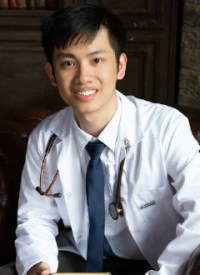
Dr. Thanh Luan Nguyen, MD, PhD, is a cardiologist and interventional cardiologist at the Department of Cardiovascular Diagnosis and Intervention, Vietnam Military Central Hospital 108, Hanoi, Vietnam. His research focuses on interventional cardiology, advanced cardiovascular imaging, and complex myocardial diseases, with a particular emphasis on infiltrative cardiomyopathies, including cardiac amyloidosis and other inherited metabolic disorders, such as Fabry disease and mucopolysaccharidoses. His work addresses the diagnostic challenges and under-recognized burden of infiltrative heart diseases, a broad and heterogeneous group that remains insufficiently studied in many clinical settings. In his recent research, he has explored a novel perspective on genotype-positive populations, suggesting that individuals carrying pathogenic mutations (e.g., Fabry disease or mucopolysaccharidoses) may already exhibit subclinical cardiovascular involvement detectable through advanced imaging, even before overt phenotypic expression. He is particularly interested in improving early detection and risk stratification through multimodality imaging, as well as integrating clinical, imaging, and biomarker data. Dr. Nguyen continues to pursue translational research aimed at redefining disease boundaries and advancing earlier, more personalized approaches to diagnosis and management in infiltrative cardiomyopathies. Follow him on ORCID and Scopus.
A good academic paper, in Dr. Nguyen’s view, should present a clear and clinically relevant research question, supported by a robust methodology and reliable data. It should be well-structured, concise, and transparent, allowing readers to understand and reproduce the findings. Importantly, it should contribute meaningful insights to the existing body of knowledge and have potential implications for clinical practice or future research.
According to Dr. Nguyen, common challenges in academic writing include formulating a clear research question, maintaining logical structure, and presenting complex data in a concise and understandable way. Language barriers can also be a difficulty for non-native English speakers. Additionally, ensuring methodological rigor and responding effectively to peer review comments are often demanding but essential parts of the process.
“Academic writing is fascinating because it allows researchers to transform clinical observations and ideas into structured knowledge that can benefit the wider medical community. It is a process of critical thinking, discovery, and communication, where each paper contributes to the advancement of science and ultimately improves patient care,” says Dr. Nguyen.
(by Brad Li, Masaki Lo)
Arif Timuroğlu
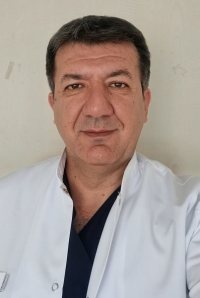
Arif Timuroğlu, MD, is an attending physician specializing in Anesthesiology and Intensive Care at the Dr. Abdurrahman Yurtaslan Ankara Oncology Training and Research Hospital in Ankara, Turkey. After earning his medical degree from Hacettepe University Faculty of Medicine (1998-2005), he completed his residency in Anesthesiology and Reanimation at Ankara University (2005-2009). Dr. Timuroğlu has dedicated over a decade to the management of critically ill patients in a tertiary cancer center ICU. His primary clinical and research interests include sepsis, ARDS, and the management of critically ill oncology patients. His recent work has focused on cardiovascular complications and treatment strategies in oncology patients, particularly acute coronary syndromes in the intensive care setting.
In Dr. Timuroğlu’s experience, one of the most significant challenges in academic writing—especially during the early stages of a career—is the lack of structured mentorship. Academic writing is not just about reporting data; it is an art that requires guidance on methodology and the nuances of scientific storytelling. Without an experienced mentor to provide feedback, navigating the complexities of study design and publication standards can be a daunting and time-consuming process. To him, overcoming this hurdle requires both resilience and a commitment to continuous self-learning. Intensive care medicine also presents a unique challenge for academic writing because the clinical reality is often complex, urgent, and multifactorial. As a result, simplifying that complexity into a clear scientific narrative without losing clinical relevance is one of the most demanding aspects of writing.
According to Dr. Timuroğlu, balancing a demanding clinical workload in an oncology ICU with academic pursuits is indeed a challenge. He has found that waiting for "long, uninterrupted hours" to write is often unrealistic. Instead, he tries to utilize every available window—even brief moments between clinical rounds or during quiet intervals in the evening. He believes that academic productivity is more about discipline than having "free time." Consistent, small efforts often lead to more significant progress than sporadic, long sessions.
“What I find most fascinating (about academic writing) is the ability to transform a silent clinician-patient interaction into shared global knowledge. In the ICU, we witness complex clinical scenarios daily. Academic writing allows us to distill those experiences into evidence that can contribute to the broader scientific community. There is a profound sense of satisfaction in knowing that even a small study can become a piece of the collective medical puzzle, ultimately leading to better outcomes for patients worldwide,” says Dr. Timuroğlu.
(by Brad Li, Masaki Lo)
Yuji Nagatomo
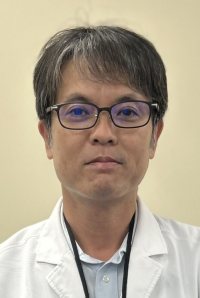
Dr. Yuji Nagatomo, MD, PhD, is an Associate Professor in the Department of Cardiology at the National Defense Medical College, Japan. His clinical and research interests focus on heart failure, spanning translational, clinical, and epidemiological research. He previously conducted research at the Lerner Research Institute, Cleveland Clinic, where he investigated novel mechanisms and biomarkers in heart failure. His work has spanned diverse aspects of heart failure pathophysiology, including heart rate modulation, cardiac autoantibodies, gut microbiota, frailty, and cardio-oncology. He is actively involved in the multicenter heart failure research projects and has authored more than 200 peer-reviewed publications. His recent projects include studies investigating individualized heart rate targets in heart failure, the clinical significance of β1-adrenergic receptor autoantibodies, and the interaction between SGLT2 inhibitors and frailty in patients hospitalized for acute heart failure. His overarching goal is to bridge mechanistic insights and clinical practice to improve outcomes for patients with heart failure. Follow him on ResearchGate.
In Dr. Nagatomo’s view, the most important skill for an author is the ability to identify meaningful clinical questions. Scientific writing is not simply about presenting data; it is about asking questions that matter to patients and clinicians. Equally important are critical thinking, intellectual curiosity, and the ability to interpret findings objectively. Clear communication is also essential, as even important discoveries may have limited impact if they are not conveyed in a logical and accessible manner. Finally, perseverance is indispensable, since research and publishing often involve repeated revisions, criticism, and setbacks before reaching publication.
Avoiding bias, according to Dr. Nagatomo, begins with recognizing that every researcher has preconceived expectations and hypotheses. He believes that it is important to interpret data objectively, even when the results do not support the original hypothesis. Seeking feedback from collaborators with different perspectives and carefully considering reviewers’ comments can also help identify potential blind spots. In addition, transparent reporting of study limitations and cautious interpretation of findings are essential. As a reviewer himself, he tries to apply the same standards to his own work and avoid overstating conclusions beyond what the data can support.
“As a cardiologist, my primary motivation (to engage in academic writing) comes from the patients I care for every day. Clinical practice often raises questions that cannot be fully answered by existing evidence, and research provides an opportunity to address those uncertainties. Many of my research ideas originate from unanswered questions encountered during daily heart failure practice. Academic writing allows us to share new knowledge, challenge existing concepts, and ultimately improve patient care. I am particularly motivated by translational research, which bridges basic science and clinical medicine. Knowing that a study may contribute, even in a small way, to a better understanding of heart failure and improved outcomes for future patients makes the effort worthwhile,” says Dr. Nagatomo.
(by Brad Li, Masaki Lo)
Karthik Gonuguntla
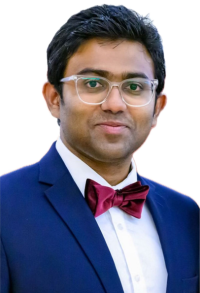
Dr. Karthik Gonuguntla is a non-invasive cardiologist at Hartford Healthcare System, specializing in cardiac imaging (echocardiography, nuclear cardiology, and cardiac CT) and preventive cardiology. After earning his medical degree from Navodaya Medical College in India, he completed his internal medicine residency at the University of Connecticut and cardiovascular disease fellowship at West Virginia University. He was a research trainee at Mayo Clinic and Yale, where he strengthened his understanding of research design, methodology, and scientific communication. His research focuses on social determinants of health and their impact on cardiovascular care and outcomes. By combining his research and clinical expertise, he provides comprehensive care to his patients. His research explores various social factors contributing to disparities in care, including access, geography, race, and sex differences. He is an active member of the American Heart Association's ATVB council and has published over 200 papers, including abstracts, manuscripts, and book chapters. He serves as a reviewer for multiple journals and major cardiology conferences, and his research has been featured in prominent media outlets worldwide. Follow him on ResearchGate and Google Scholar.
Strong academic papers, according to Dr. Gonuguntla, start with a clear, clinically meaningful question. They rely on rigorous methods and reliable data, presented with precision and reproducibility. The goal is not just to report results, but to build a coherent scientific argument. Present findings diligently and without bias. Above all, the work should add something new and should serve as a foundation for future ideas and papers.
In Dr. Gonuguntla’s view, writing a paper is far more than simply typing up data. The real work lies in the thinking behind it. First, ensure the science is sound—present honest, robust data and methods with no corners cut. Then, communicate the findings clearly so that a busy clinician can read and apply them without struggling through unnecessary jargon. Ethics are non-negotiable: cite sources properly, disclose conflicts of interest, and safeguard patient privacy at every step. Throughout the process, authors should continually ask themselves: How will this paper advance the field and ultimately improve patient outcomes?
“We selected CDT for our manuscript on artificial intelligence in cardiology because it provides an ideal venue for this work. CDT’s scope from clinical cardiology and basic science to public health and emerging technologies makes it a strong fit for research at the intersection of technology, diagnostics, and clinical practice, which is exactly where our AI study sits. Finally, CDT’s focus on innovative approaches to cardiovascular diagnosis and therapy aligns with the core contribution of our paper,” says Dr. Gonuguntla.
(by Brad Li, Masaki Lo)